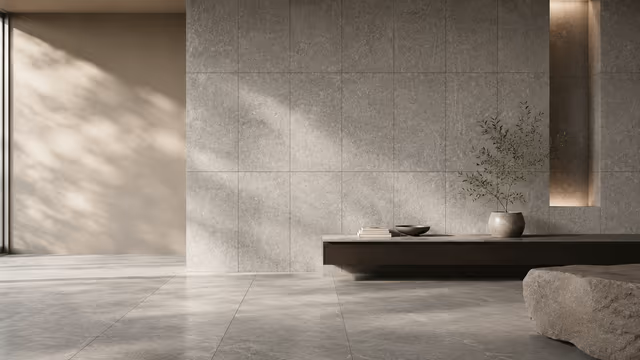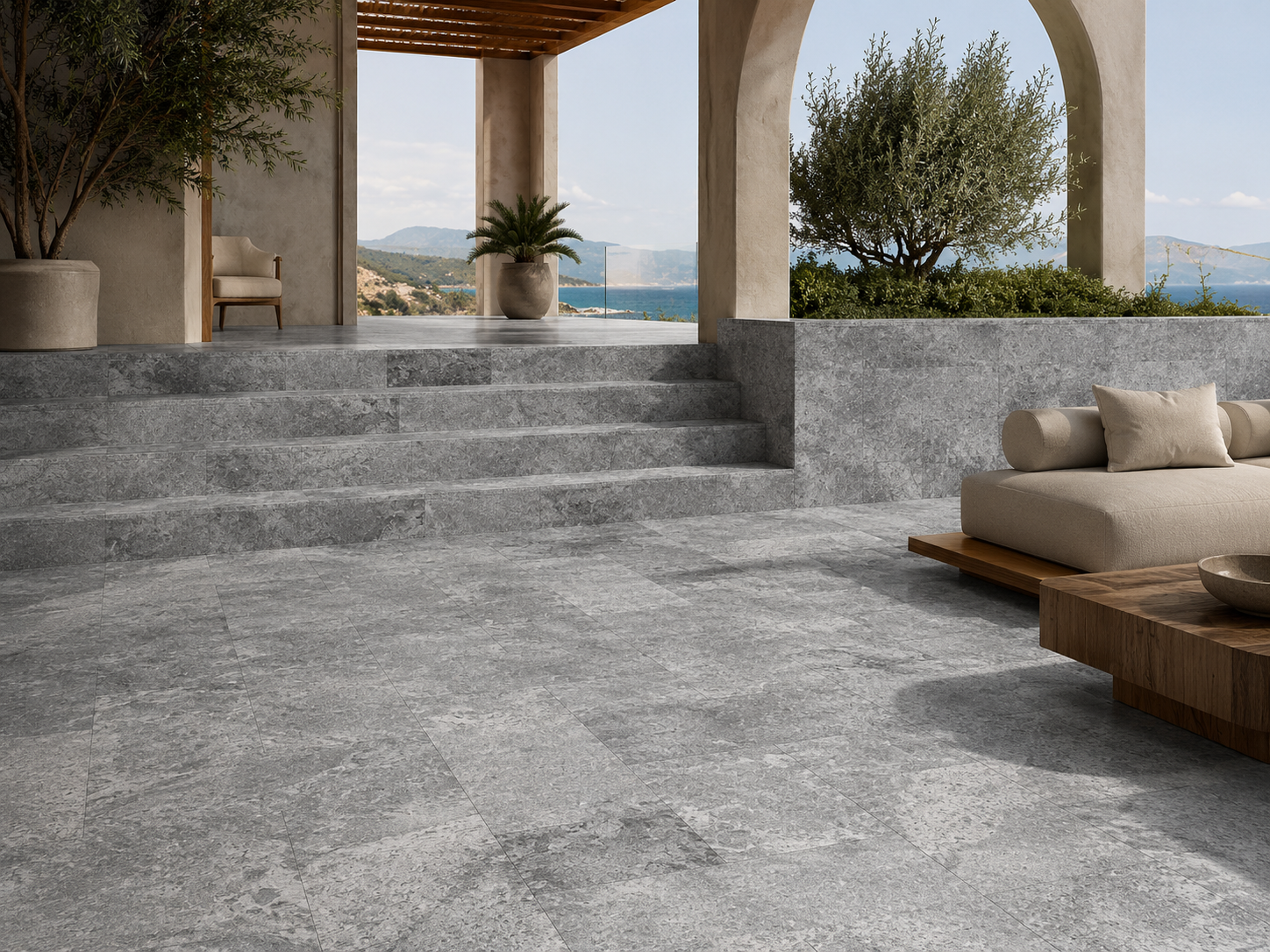
Choosing natural stone for an interior begins with design. Choosing it for an exterior should begin with environment.
A terrace in Dubai and a terrace in Moscow may look similar in an architectural rendering, but they ask completely different questions of the stone.
Temperature. Rain. Snow. Freeze-thaw cycles. Pool chemicals. Drainage. Foot traffic. Surface texture.
These variables matter just as much as colour or veining.
Start with the Specific Stone, Not the Stone Family
“Travertine.” “Limestone.” “Marble.”
These names are useful categories, but they are not technical specifications.
Two limestones can behave differently. Two travertines can have very different pore structures. Even stones sold under the same commercial family may show variation from one quarry layer to another.
Natural Stone Institute guidance notes that absorption among limestone and travertine materials can vary substantially.
This is why serious exterior specification begins with test data for the actual material.
Why Water Absorption Matters
Cold climates introduce a simple but powerful problem.
Water can enter pore structures.
When conditions repeatedly move above and below freezing, moisture behaviour becomes a critical part of long-term performance.
But absorption is only one part of the equation. Pore structure, density, stone quality, detailing and installation all contribute to performance.
For exterior dimension stone, the Natural Stone Institute references standards including ASTM C97 for absorption and bulk specific gravity, as well as separate material specifications for marble, limestone and travertine.
The lesson for architects and buyers is straightforward: Do not approve an exterior stone solely because a sample survived in a showroom. Ask for relevant technical information.
Drainage Is Part of the Stone Specification
Even an appropriate natural stone can perform poorly in a badly designed assembly.
Water needs somewhere to go.
Incorrect slopes, trapped moisture, poor substrate preparation and inappropriate joints can create problems that are blamed on the stone even when the larger issue is the installation system.
This becomes particularly important around pools and terraces where surfaces are repeatedly exposed to water.
Exterior stone selection should therefore happen together with drainage and installation design. Not after it.
The Pool Question: Is Travertine a Good Choice?
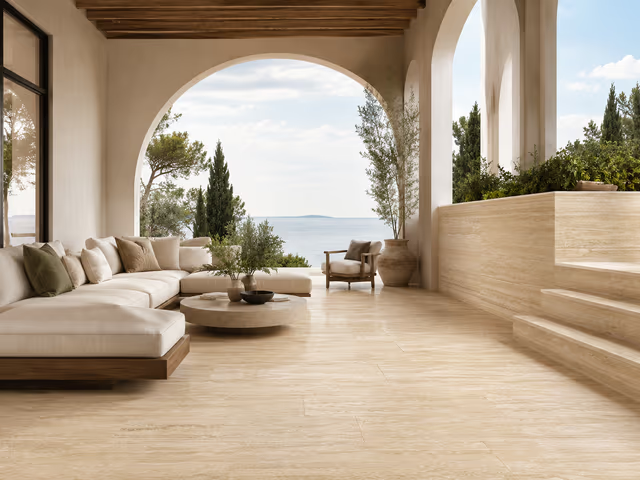
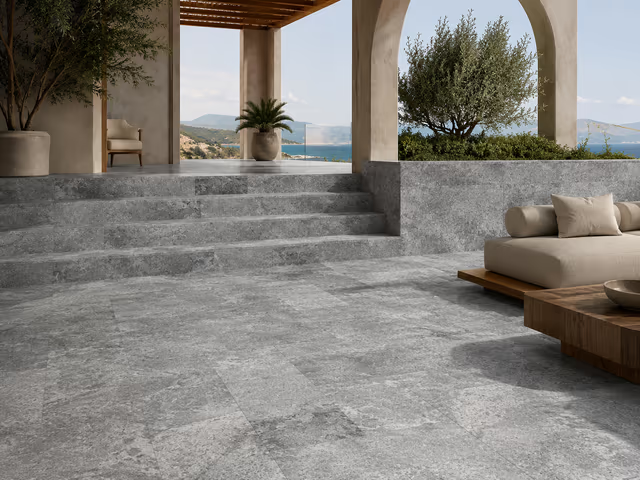
Travertine is widely used around pools and terraces because of its warm colour palette, natural texture and strong connection with Mediterranean architecture.
But the more useful question is: Which travertine, with which finish, in which climate and installed how?
A project in a hot, dry climate may have different priorities from one facing severe winter conditions.
The stone's technical properties should therefore be reviewed against project requirements rather than relying on a generic claim that every travertine behaves identically.
Surface Finish Is a Safety Decision
A polished surface may look beautiful in an interior. That does not automatically make it the best choice beside a swimming pool.
Wet exterior areas require consideration of slip characteristics, and surface texture plays an important role.
Honed, brushed, tumbled or mechanically textured surfaces can create very different underfoot behaviour.
Architects should therefore select finishes according to both aesthetics and required performance.
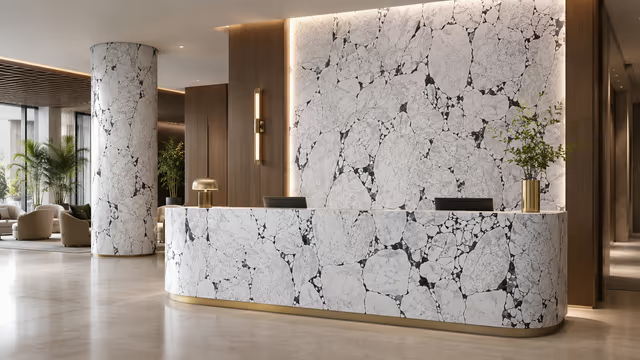
This is also why the same stone may be specified differently for an interior lobby and the terrace immediately outside it. Material continuity does not require finish continuity.
Sunlight and Heat Also Matter
Cold climates are not the only exterior challenge.
Pool decks in warm regions are exposed to intense solar radiation.
Colour and surface characteristics influence how a material feels underfoot, making stone selection a sensory decision as well as a visual one.
A pool deck is experienced barefoot. That changes the design brief.
Do Not Forget Chemicals and Cleaning
Pool environments may expose surrounding surfaces to treated water and cleaning products.
Calcium-carbonate stones such as marble, limestone and travertine are sensitive to acids, so inappropriate cleaning products can damage the finish.
Natural Stone Institute care guidance specifically cautions against acidic cleaners such as vinegar- or lemon-containing products on calcareous stones.
Exterior maintenance specifications should therefore be provided from the beginning of the project.
Five Questions an Architect Should Ask
Before approving exterior stone, the project team should know:
What are the relevant physical test results for this material?
What climate will the installation experience?
How will water drain from and beneath the stone?
Which surface finish provides the required performance?
What maintenance system will be used?
The colour of the stone can be chosen in an afternoon. Its long-term performance is determined by decisions that are often invisible.
That is the difference between selecting a beautiful stone and specifying the right natural stone system.
Quick answers
Is travertine good for pool decks?
Travertine is widely used around pools because of its warm colour palette and natural texture, but the correct question is which travertine, with which finish, in which climate and installed how. Technical properties should be reviewed against project requirements.
Can natural stone be used in cold climates?
Yes, but exterior stone in cold climates requires attention to water absorption, freeze-thaw cycles, pore structure, drainage and installation. The Natural Stone Institute references ASTM C97 for absorption and separate material specifications for marble, limestone and travertine.
What finish is best for outdoor stone?
Honed, brushed, tumbled or mechanically textured surfaces provide better slip characteristics than polished surfaces in wet exterior areas. The same stone may be specified differently for an interior lobby and the terrace immediately outside it.
Does pool water damage natural stone?
Calcium-carbonate stones such as marble, limestone and travertine are sensitive to acids, so inappropriate cleaning products can damage the finish. Exterior maintenance specifications should be provided from the beginning of the project.
What should architects ask before specifying exterior stone?
Architects should confirm the stone's physical test results, the climate it will experience, how water drains from and beneath the stone, which finish provides required performance, and what maintenance system will be used.