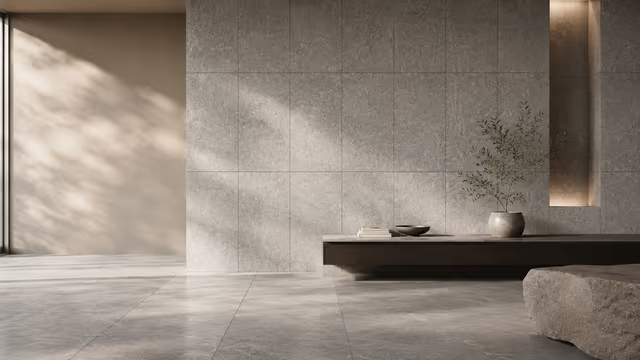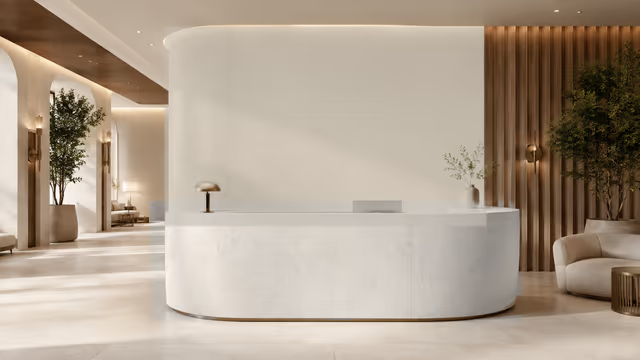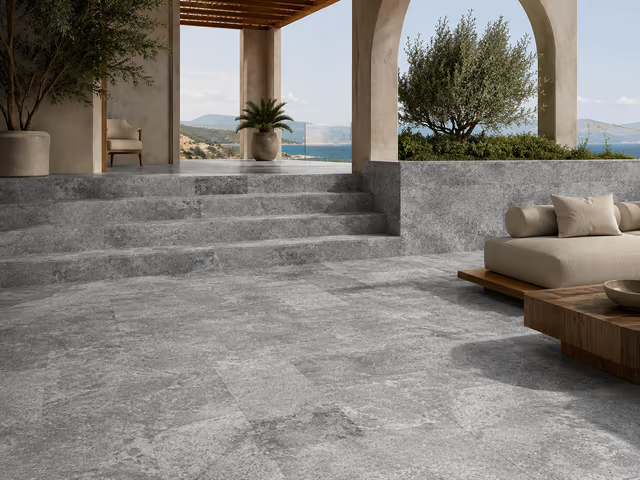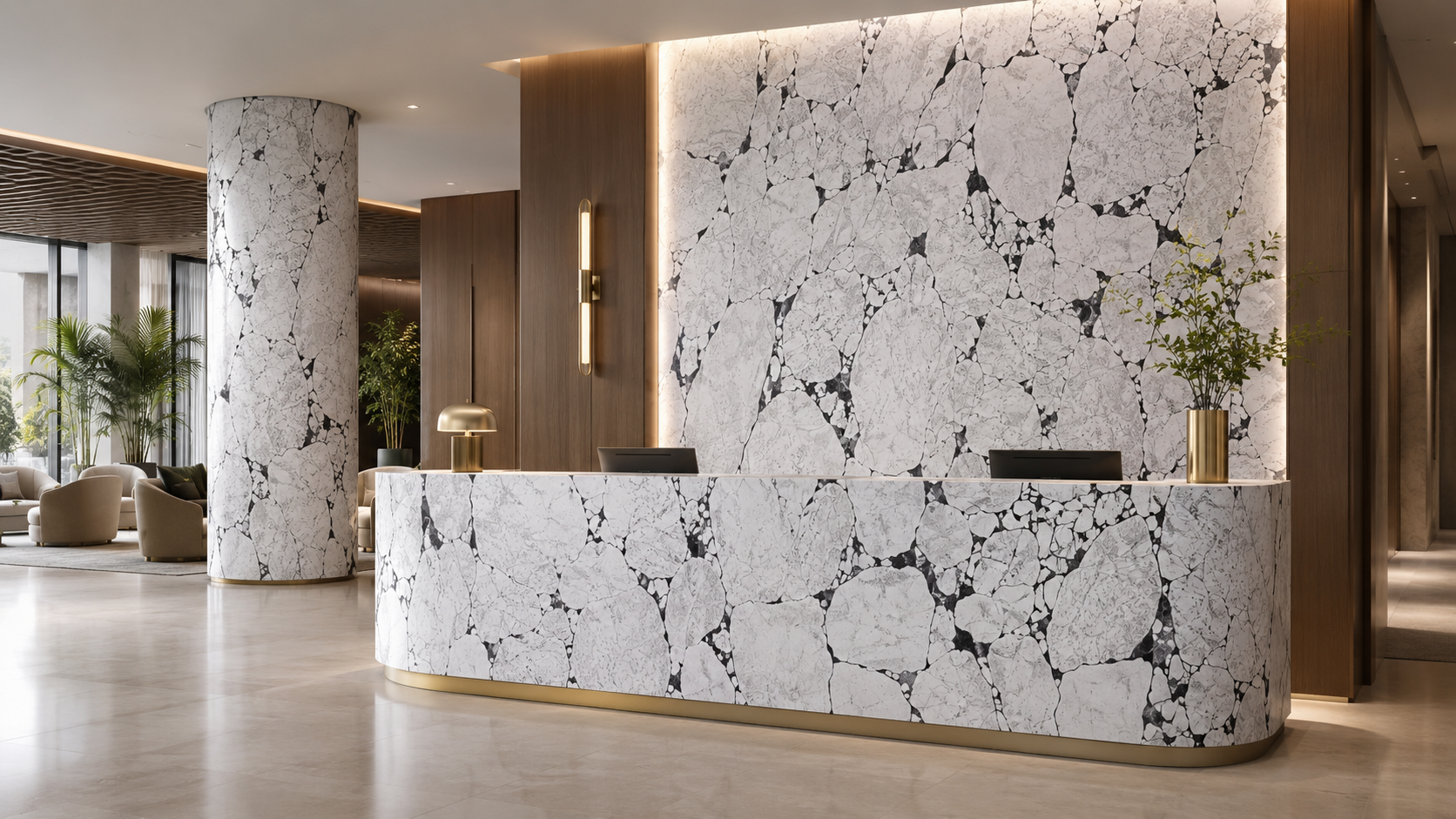
For years, luxury interiors seemed to follow a simple formula: pale stone, subtle veining, clean surfaces and as little visual disruption as possible.
That formula is changing.
In 2026, architects and interior designers are rediscovering one of the most compelling qualities of natural stone: its individuality. Rather than asking stone to disappear quietly into a room, designers are increasingly allowing it to become part of the architecture itself.
At Milan Design Week 2026, stone appeared prominently in tactile and highly architectural applications, while contemporary design publications have highlighted a renewed appetite for expressive marble, travertine and translucent stones such as onyx.
The new luxury is not about perfection. It is about material character.
From Quiet Stone to Statement Stone
White and grey marble will never disappear from architecture. Their versatility is too valuable.
But the definition of luxury stone is becoming broader.
Designers are increasingly drawn toward slabs with pronounced movement, unexpected colours and geological patterns that could never be reproduced exactly twice.
Deep burgundy, purple, forest green, warm gold and dramatic contrasting veins are becoming alternatives to the restrained grey-and-white palette that dominated many interiors over the previous decade.
Calacatta Viola is one example. Its characteristic burgundy and violet movement has become particularly visible in 2026 kitchen and interior design coverage, while darker stones such as Rosso Levanto are also appearing in more expressive interiors.
The reason is simple. When natural stone becomes visually powerful enough, the surface itself becomes decoration.
A kitchen island no longer needs excessive detailing when the slab provides the composition. A bathroom wall does not necessarily require artwork when carefully selected stone creates its own landscape.
Travertine: Warmth Replaces Sterility
Travertine represents another side of the same movement.
Instead of dramatic veins, its appeal comes from texture, layers, subtle tonal variation and natural porosity.
It brings something to contemporary architecture that highly polished surfaces often cannot: warmth.
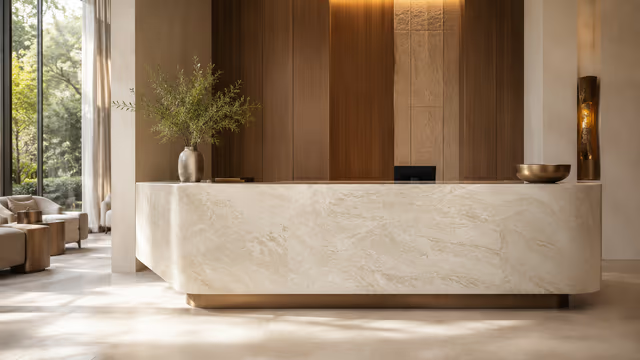
Current design coverage shows travertine returning to kitchens, bathrooms, furniture, hospitality spaces and architectural interiors as designers move toward tactile, earthy and naturally imperfect materials.
Beige is no longer simply beige. Within a good travertine slab there may be cream, sand, hazelnut, silver, tobacco or warm ivory tones.
The way the block is cut changes the visual language even further.
Vein-cut travertine exposes its geological layers as long directional bands. Cross-cut travertine reveals a softer, cloud-like pattern.
The same geological material can therefore produce two completely different architectural identities.
This versatility explains why travertine works particularly well with other natural materials such as timber, plaster, bronze, linen and glass.
Onyx: Designing with Stone and Light
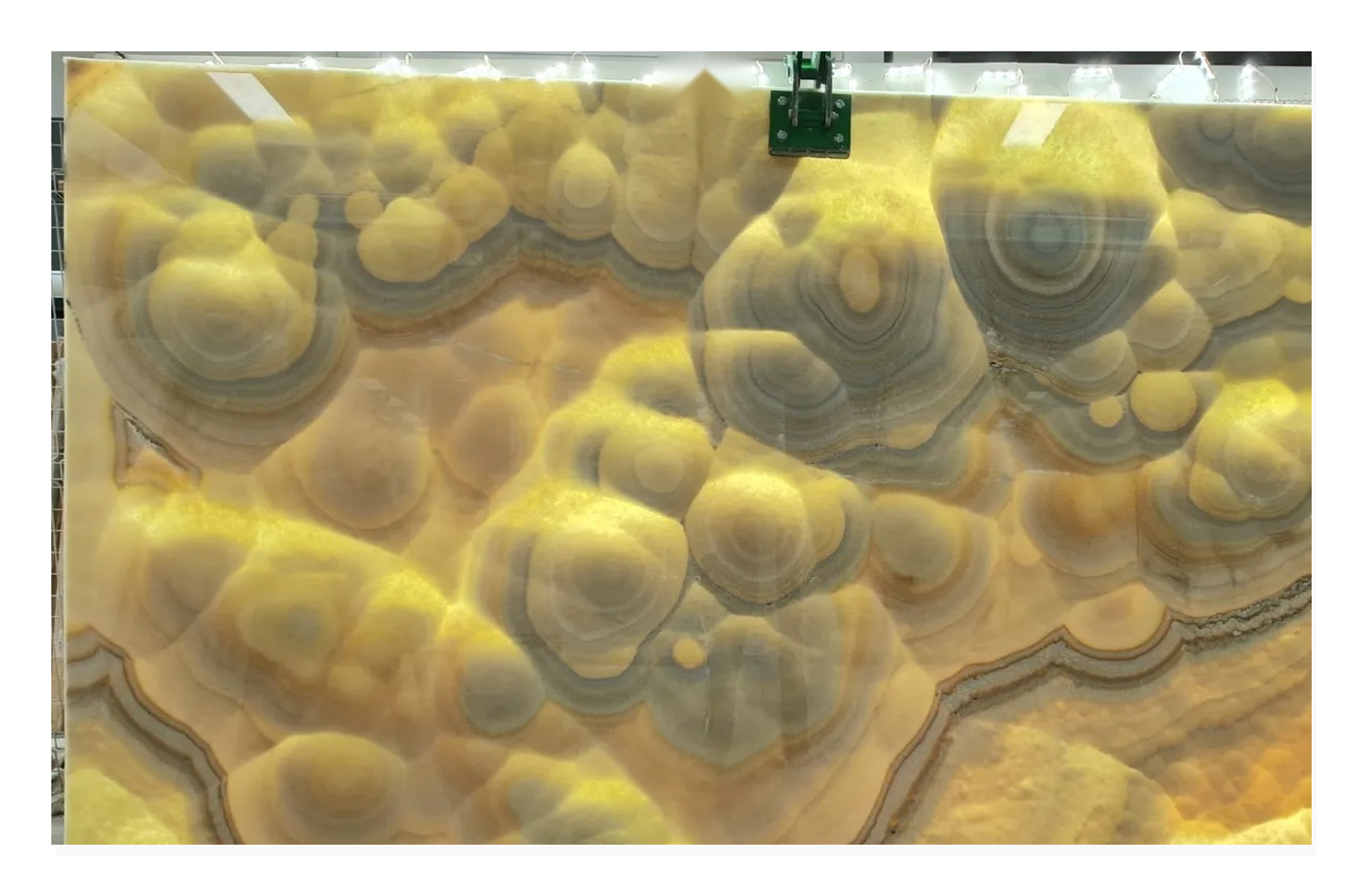
If marble is about movement and travertine about texture, onyx introduces another dimension entirely: light.
Its translucent structure allows carefully designed lighting to reveal colour, depth and mineral layering that remain more subtle when the stone is unlit.
This is why onyx is increasingly used for feature walls, reception desks, bars, bathroom elements and hospitality interiors where the material is intended to become a focal point. Backlighting can transform a stone surface into part wall, part sculpture and part lighting installation.
The most sophisticated installations, however, do not simply place LEDs behind a slab.
Stone selection, slab thickness, lighting distance, colour temperature, diffuser design and access for future maintenance all affect the final result.
In other words, backlit onyx should be designed as an architectural system rather than treated as decoration added at the end.
Texture Is Becoming as Important as Colour
The choice of stone is only half the design decision.
Finish changes the way a stone communicates with the room.
A polished marble reflects light and intensifies colours and contrast. A honed surface feels softer and more architectural. Brushed, textured and other mechanical finishes can reveal additional dimensions of the stone.
This increasing focus on tactility is consistent with the wider 2026 movement toward textured, crafted and nature-driven surfaces.
Natural Variation Is the New Definition of Exclusivity
Perhaps the most important shift is psychological.
For manufactured surfaces, variation is often considered a defect. For natural stone, variation is the reason the material exists.
No two slabs are exactly identical.
Different parts of the same block may reveal different concentrations of colour, fossils, clouds, veins and mineral structures. Designers increasingly use these differences intentionally rather than trying to eliminate them.
This is where natural stone separates itself from an imitation.
A printed surface repeats a design. A natural slab records geological time.
And in a world increasingly filled with digitally generated and industrially replicated surfaces, that individuality may be the ultimate form of luxury.
The Terra Perspective
The most successful stone projects of 2026 will not simply ask: Which stone is fashionable?
They will ask: Which stone creates the right architectural experience for this particular space?
Sometimes the answer will be a calm limestone. Sometimes warm travertine. Sometimes a restrained grey marble. And sometimes it will be a dramatic slab that becomes the entire visual identity of the room.
Natural stone has never offered architects more creative possibilities.
The opportunity is to let the stone speak.
Quick answers
What are the natural stone trends for 2026?
In 2026, architects and designers are moving toward expressive marble with pronounced movement, warm travertine for tactile interiors, translucent backlit onyx for feature walls, and natural variation as a marker of luxury rather than uniformity.
Is travertine trending in 2026?
Yes. Travertine is returning to kitchens, bathrooms, hospitality spaces and architectural interiors as designers move toward tactile, earthy and naturally imperfect materials that bring warmth to contemporary architecture.
What marble colours are trending in 2026?
Deep burgundy, purple, forest green, warm gold and dramatic contrasting veins are replacing the restrained grey-and-white palette, with Calacatta Viola and Rosso Levanto appearing prominently in 2026 interior design coverage.
Is onyx still popular in luxury interiors?
Yes. Onyx is increasingly used for backlit feature walls, reception desks, bars and hospitality interiors where the material becomes a focal point, with lighting designed as an integral architectural system rather than decoration added at the end.
What is the new definition of luxury natural stone?
The 2026 definition of luxury natural stone is material character and individuality. No two slabs are identical, and designers increasingly use natural variation intentionally rather than trying to eliminate it.